Journals

  • Instructional Design and Ethical Pedagogy

    This journal focuses on the study of Instructional Design Engineering grounded in ethics and religious values within the digital ecosystem. The scope of submissions is limited to the development of learning strategies, models, and tactics that integrate principles of moral integrity (akhlaq) and human nature (fitrah) into cognitive architecture.

    The journal specifically welcomes research on the design of artificial intelligence (AI)-based learning environments that uphold privacy and human dignity, teaching methodologies that mitigate dehumanization in machine-assisted learning, and instructional tactics that strengthen spiritual character through cognitive load analysis. The primary emphasis is on the development of Theocentric Instructional Design—namely, the engineering of learning experiences that balance technological advancement with ethical and religious responsibility.

    The journal does not accept descriptive manuscripts lacking a strong instructional design (ID) theoretical foundation, nor studies in educational technology that neglect the ethical-religious dimension in their design.

  • Ethical Media Architecture and Educational Technology

    This journal specifically accepts research on the efficacy of adaptive learning algorithms, the use of artificial intelligence (AI) that upholds data privacy, and the development of immersive media (VR/AR/Metaverse) designed to strengthen learners’ moral and spiritual character. The primary focus is on technical validation through user experience (UX) testing and cognitive load analysis within a theocentric digital ecosystem.

    The journal does not accept descriptive reports on media development without empirical testing, standard application development tutorials, or studies on technology that disregard ethical dimensions and religious norms.

  • Journal of Neuro-Digital English Pedagogy

    Journal of Neuro-Digital English Pedagogy is peer reviewed journal that advances a neuro-digital integration paradigm in English language education. The journal distinguishes itself by requiring a direct linkage between brain-based evidence, cognitive processes, and digital instructional design, rather than treating them as separate domains. The Journal prioritizes studies that move beyond tool-based innovation and focus on mechanism-driven pedagogy, where instructional decisions are grounded in measurable cognitive or neurocognitive outcomes.

  • Adaptive Agritechnical Education

    Ethno-Agritechnology: Combining local wisdom with modern technology in education—this is rarely discussed from a technical-vocational perspective.
    Marginal Lands & Low-Cost: Focusing on teaching tools for challenging conditions (not just ideal fields), which is highly relevant for developing countries and global food security issues.
    Technology Sovereignty: Shifting the focus from merely "how to use factory-made machines" to "how to modify and create tools" as part of the school curriculum.

  • Ma qasid Based Algorithmic Shura

    This journal focuses on the study of Digital Hisbah, which involves the oversight of algorithms and public policy accountability based on the Maqasid al-Shari’ah framework. Its scope includes the development of Algorithmic Shura to ensure justice in automated bureaucracy, technical audits of programming code to detect systemic biases that contradict public welfare (Maslahah Mursalah), and the engineering of Human-in-the-loop ethics. This journal examines the application of blockchain and big data from the perspective of Islamic trust (Amanah) for mitigating digital discrimination. We only accept interdisciplinary manuscripts that integrate public administration, algorithmic technology, and Islamic values, while rejecting descriptive or conventional studies that lack ethical-religious accountability analysis.

  • Islamic Digital Business and Algorithmic Ethics

    This journal focuses on the study of the Integration of Muamalah Norms in Digital Business Architecture. The scope of the manuscript is limited to the engineering of Sharia-compliant business algorithms, including automated audits of Smart Contracts to prevent Gharar (uncertainty) and AI ethics analysis in digital transactions to avoid Tadlis (fraud). This journal specifically accepts research on Digital Hisbah in E-Commerce, algorithmic accountability in Dynamic Pricing based on Islamic justice values, and the standardization of Sharia compliance norms in Autonomous Organization Systems (DAO). We only accept interdisciplinary manuscripts that integrate digital business techniques with in-depth analysis of Islamic norms, while rejecting descriptive business studies or conventional management without algorithmic integrity analysis.

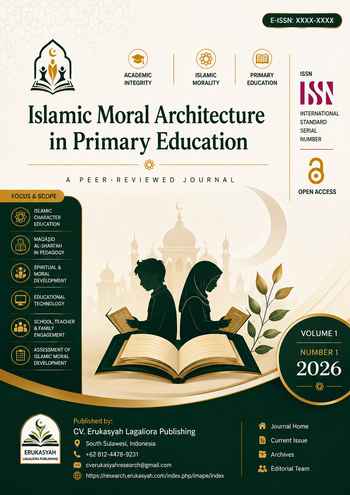
  • Islamic Moral Architecture in Primary Education

    This journal focuses on the study of instructional design engineering for strengthening Islamic morals (Akhlak) at the primary education level. The scope of the manuscript is limited to the development of Maqasid al-Shari’ah-based learning models for early childhood and primary school students, the integration of fitrah-friendly educational technology, and neuro-pedagogical analysis in spiritual character formation. We prioritize research that examines the efficacy of digital media in instilling Islamic ethics and mitigating the negative impact of technology on the morality of primary school children.